
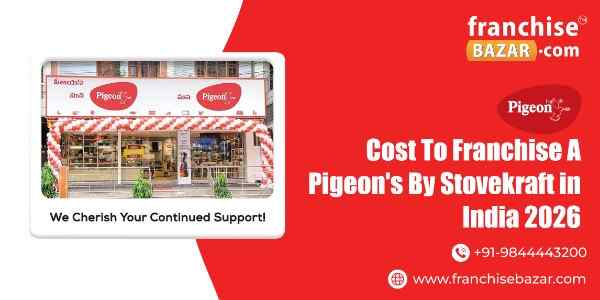
Cost To Franchise A Pigeon By Stovekraft in India 2026
Written By: Harsh Vardhan Singh
India’s kitchen and home appliances market has quietly transformed from a price-driven category into a brand-led, trust-based retail segment. As nuclear families grow, cooking habits evolve, and small appliances become everyday essentials, organised appliance brands are replacing local and unbranded players. At the centre of this shift is Stovekraft, the company behind the widely recognised Pigeon brand. By 2026, interest in owning a Pigeon By Stovekraft retail franchise is rising among investors who want a consumer durable business with predictable demand, national brand recall, and long-term scalability.
This guide breaks down the real cost to franchise Pigeon by Stovekraft, the business model, margins, operational realities, and whether this opportunity makes sense for retail investors in 2026.
Why Kitchen Appliance Retail Is Gaining Investor Attention
Kitchen appliances are no longer occasional purchases.
Key demand drivers
- Rising urbanisation
- Smaller households cooking more at home
- Growth of working couples
- Increased health awareness and home cooking
- Expansion of modular kitchens
- Growth in gifting and festival purchases
Cookware and small appliances are now repeat and upgrade-driven categories, not one-time buys.
Understanding the Pigeon By Stovekraft Brand
Pigeon is one of India’s most trusted kitchenware and appliance brands, backed by Stovekraft’s manufacturing and distribution strength.
What defines the brand
- Strong middle-class recall
- Wide product range
- Competitive pricing with quality positioning
- Presence across offline and online channels
- Proven performance in Tier 1, Tier 2, and Tier 3 cities
This wide appeal is a major reason investors explore Pigeon By Stovekraft as a franchise option.
What Products Does a Pigeon Exclusive Store Sell
A Pigeon franchise store is a multi-category kitchen solutions outlet.
Core product categories
- Gas stoves and cooktops
- Pressure cookers
- Non-stick cookware
- Mixer grinders
- Small kitchen appliances
- Induction cooktops
- Kitchen tools and accessories
This diversity reduces dependency on a single product line.
Why Stovekraft Uses a Franchise-Led Retail Model
Running company-owned stores across India is capital-intensive. Franchising allows faster penetration.
Benefits of the retail franchise model
- Local market knowledge from franchisees
- Faster city-wise expansion
- Lower operational risk for the brand
- Stronger community-level presence
For investors, this means operating under a tested national system.
How the Pigeon By Stovekraft Franchise Model Works
The franchise operates as an exclusive brand outlet.
What the franchise owner handles
- Store location and lease
- Store setup and staffing
- Daily sales operations
- Local promotions
What Stovekraft supports
- Brand rights and identity
- Product supply and logistics
- Visual merchandising guidelines
- Sales training
- Marketing collateral
- Inventory planning support
This division keeps operations manageable for retail investors.
Cost To Franchise Pigeon By Stovekraft in India
The Pigeon By Stovekraft franchise cost depends on city size, store format, and inventory depth.
Typical cost components
- Franchise or brand association fee
- Store interiors and branding
- Initial product inventory
- POS systems and billing
- Staff hiring and training
- Working capital buffer
Indicative investment range
- ₹25 lakh to ₹40 lakh
This places Pigeon in the mid-investment consumer durable franchise segment.
Store Size and Location Requirements
Location directly impacts walk-in conversion.
Preferred store parameters
- 500 to 1000 square feet
- High-street retail or busy market area
- Proximity to residential clusters
- Visibility from main road
- Easy access for families
Appliance retail works best where households shop regularly.
Why Pigeon Works Well in Tier 2 and Tier 3 Cities
While metros are competitive, smaller cities offer stronger balance.
Reasons Tier 2 and Tier 3 cities perform well
- High brand trust
- Lower rentals
- Less organised competition
- Rising disposable income
- Strong festival demand
Many franchisees report faster stabilisation outside metros.
Revenue Model Inside a Pigeon Franchise Store
Revenue is driven by volume and product mix.
Primary revenue contributors
- Gas stoves and cookers
- Cookware sets
- Mixer grinders
- Festival and wedding purchases
- Replacement and upgrade sales
Add-on accessories increase bill value organically.
Understanding Margins in Appliance Retail
Margins vary by product category.
General margin structure
- Core appliances offer stable margins
- Accessories and cookware provide higher margins
- Volume improves overall profitability
- Festival discounts are brand-led, not franchise-led
Net margins depend on inventory discipline and sales execution.
Monthly Earnings Expectations
Monthly performance depends on location and seasonality.
Indicative expectations
- Stable daily walk-ins
- Strong festival and wedding season spikes
- Consistent replacement demand
- Higher volumes during promotional cycles
This creates predictable cash flow rather than sharp fluctuations.
Inventory Management Is the Real Profit Lever
Retail profitability depends less on margins and more on stock movement.
Best practices
- Balanced inventory across fast and slow movers
- Avoid overstocking slow SKUs
- Timely replenishment during peak seasons
- Alignment with brand promotions
Efficient inventory rotation protects working capital.
Marketing Support and Brand Pull
Pigeon benefits from national-level brand marketing.
Brand-driven demand sources
- Television and digital advertising
- E-commerce presence reinforcing trust
- Festival campaigns
- Dealer-led local promotions
Franchisees benefit from brand pull rather than building demand from scratch.
Staffing and Daily Operations
Operations are simpler than food or service franchises.
Typical staffing needs
- Store manager
- Sales executives
- Billing support
Product training improves upselling and customer satisfaction.
Customer Behaviour in Kitchen Appliance Retail
Buying behaviour is practical and trust-driven.
Observed patterns
- Replacement purchases every few years
- First-time buyers during marriage or relocation
- Gift purchases during festivals
- Preference for known brands over price alone
This behaviour favours established brands like Pigeon.
Competition Landscape
Pigeon competes with both organised and unorganised players.
Competitive advantages
- Wider product range than local stores
- Better pricing consistency
- After-sales support
- Warranty-backed products
Local stores compete on price, but brand trust often wins.
Role of After-Sales Service in Customer Retention
Appliance trust extends beyond purchase.
Why after-sales matters
- Warranty claims build confidence
- Service availability influences repeat purchases
- Brand-backed support reduces conflict
Stovekraft’s service network strengthens franchise credibility.
Scalability and Multi-Store Potential
Successful franchisees can expand.
Expansion options
- Multiple outlets in one city
- Expansion to nearby towns
- Wholesale and institutional supply
Experience from the first store improves future performance.
Risks Investors Should Be Aware Of
Every retail business has challenges.
Realistic risks
- Inventory mismanagement
- Location selection errors
- High competition in metros
- Seasonal demand fluctuations
Strong planning reduces most of these risks.
Why 2026 Is a Strategic Year for This Franchise
Several factors align in 2026.
Key reasons
- Growth in consumer durables spending
- Expansion of housing projects
- Rising replacement demand
- Strong wedding season cycles
- Brand consolidation in appliance retail
These trends support organised appliance franchises.
Who Should Consider a Pigeon By Stovekraft Franchise
This opportunity suits
- Retail investors
- Business families
- First-time franchise owners
- Investors seeking steady consumer demand
- Entrepreneurs preferring low operational complexity
It may not suit investors seeking quick speculative returns.
Final Investor Perspective
The Pigeon By Stovekraft franchise is not a trend-based retail experiment. It is a brand-backed consumer durable business built on everyday household demand.
For investors who want
- A known national brand
- Predictable sales cycles
- Manageable operations
- Moderate investment range
- Long-term scalability
Franchising Pigeon by Stovekraft in 2026 offers a balanced retail opportunity.
Kitchen habits may evolve, but the need for reliable appliances remains constant. And brands that sit inside everyday Indian kitchens tend to last.
Disclaimer: The brands mentioned in this blog are the recommendations provided by the author. FranchiseBAZAR does not claim to work with these brands / represent them / or are associated with them in any manner. Investors and prospective franchisees are to do their own due diligence before investing in any franchise business at their own risk and discretion. FranchiseBAZAR or its Directors disclaim any liability or risks arising out of any transactions that may take place due to the information provided in this blog.
Recent Blogs

Thinking about opening a diagnostic centre in India? It’s...
So, you’re thinking about joining India’s quick-service...
Thinking about opening a convenience store in India in 2027? You may...

If you are researching a Tumbledry franchise in India...

Why Should I Register?
You are seeking to access information which is provided only to registered members. It takes less than a minute to register and access information on FRANCHISEBAZAR.