
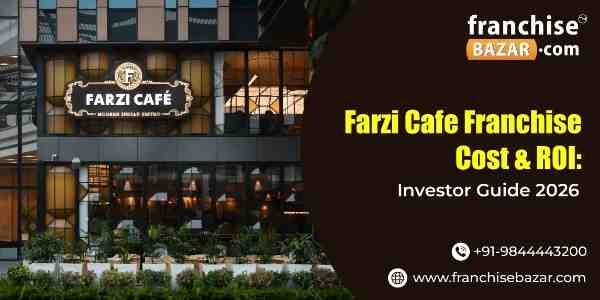
Farzi Cafe Franchise Cost and ROI: Investor Guide 2026
Written By: Harsh Vardhan Singh
Over the last decade, modern casual dining has carved out a powerful middle ground where ambience, experience, and innovation matter as much as food. One brand that has mastered this space is Farzi Cafe. As 2026 approaches, the farzi cafe franchise is being actively evaluated by high-net-worth individuals, hospitality investors, and business groups looking to enter the premium restaurant segment.
This guide breaks down the real investment, operational structure, revenue potential, risks, and long-term viability of Farzi Cafe as an investment opportunity.
Understanding the Farzi Cafe Brand
Farzi Cafe is positioned as a modern Indian bistro that blends traditional flavours with contemporary presentation.
Key brand characteristics
- Modern reinterpretation of Indian cuisine
- Premium ambience and experiential dining
- Strong presence in metro cities
- High brand recall among urban consumers
- Focus on dine-in experience rather than delivery
The brand attracts a lifestyle-driven audience that values experience as much as food.
Why Farzi Cafe Attracts Investors
The farzi cafe franchise sits in a segment that balances aspiration and spending power.
Key investor attractions
- Premium pricing power
- High average bill value
- Alcohol-driven revenue upside
- Strong weekend and evening footfall
- Brand association with luxury dining
Unlike mass casual dining chains, Farzi Cafe targets a customer base that spends intentionally rather than impulsively.
Restaurant Market Trends Supporting the Brand
India’s premium dining market is expanding steadily.
Supporting trends
- Rising disposable income in metros
- Young professionals dining out frequently
- Experience-led spending replacing commodity dining
- Growth of premium alcohol consumption
- Social media driven restaurant discovery
These trends support the long-term relevance of brands like Farzi Cafe.
Farzi Cafe Franchise Model Explained
Farzi Cafe operates on a partnership-led restaurant expansion model.
What the investor handles
- Property acquisition or lease
- Capital investment and interiors
- Staff hiring and daily operations
- Local compliance and licensing
What the brand provides
- Brand usage and positioning
- Menu design and updates
- Kitchen SOPs and recipes
- Staff training support
- Marketing guidelines
- Design and ambience direction
The brand maintains strong control over experience standards.
Investment Cost for a Farzi Cafe Franchise in 2026
This is a high-investment hospitality format.
Major cost components
- Brand association and onboarding
- Premium interior design
- Kitchen infrastructure and equipment
- Furniture and fixtures
- Licensing and permits
- Pre-opening marketing
- Working capital buffer
Indicative investment range
- ₹8 crore to ₹15 crore depending on city and size
This positions the farzi cafe franchise firmly in the luxury restaurant investment category.
Space and Location Requirements
Location selection is critical.
Preferred location attributes
- Metro or high-income urban zones
- High-street or premium mall locations
- 4000 to 7000 square feet
- Strong nightlife or business district presence
- Parking availability
Visibility and accessibility directly impact footfall.
Revenue Streams Inside a Farzi Cafe
Revenue is diversified across multiple touchpoints.
Primary income sources
- Dine-in food sales
- Alcohol and bar services
- Special tasting menus
- Corporate bookings
- Private events and celebrations
Alcohol often contributes a significant portion of margins where permitted.
Average Order Value and Customer Spend
Customer spend is one of the strongest drivers.
Typical spending behaviour
- High average bill per table
- Group dining increases ticket size
- Premium cocktails and drinks boost margins
- Weekend spending significantly higher than weekdays
This allows revenue optimisation without constant footfall growth.
Operating Cost Structure
Luxury dining comes with high operating discipline.
Major expense heads
- Staff salaries
- Raw material sourcing
- Alcohol procurement
- Utilities and maintenance
- Rent or revenue share
- Marketing and promotions
Margins depend heavily on cost control and waste management.
Profitability and ROI Expectations
The farzi cafe franchise is not a quick-return investment.
General financial outlook
- Break-even period of 30 to 48 months
- EBITDA margins improve after stabilisation
- Peak profitability achieved post brand maturity
- Strong cash flows during weekends and events
ROI improves as brand loyalty builds.
Why Experience Matters More Than Pricing
Farzi Cafe does not compete on discounts.
Customer decision factors
- Ambience and interiors
- Presentation of food
- Social media appeal
- Service quality
- Consistency
Experience-driven dining reduces price sensitivity.
Staffing and Talent Requirements
Human capital is critical.
Key staffing needs
- Experienced chefs
- Trained bar professionals
- Floor managers
- Service staff with hospitality background
Staff training and retention directly impact reviews and repeat visits.
Marketing Strength of the Brand
Marketing is experience-led rather than discount-led.
What drives demand
- Social media content
- Influencer visits
- Word-of-mouth publicity
- Event hosting
- Brand reputation
Premium brands grow through perception, not price wars.
Tier 1 Cities vs Tier 2 Cities
Farzi Cafe is currently best suited for Tier 1 markets.
Tier 1 advantages
- Higher spending capacity
- Strong nightlife culture
- Brand familiarity
Tier 2 challenges
- Lower premium dining frequency
- Longer gestation period
- Higher demand volatility
Expansion remains metro-focused for now.
Risks Investors Must Understand
Luxury dining carries unique risks.
Key risk factors
- High fixed costs
- Economic slowdowns affecting discretionary spend
- Staffing turnover
- Licensing complexities
- Alcohol policy changes
These risks require long-term capital and patience.
Scalability and Multi-Outlet Potential
The brand supports selective expansion.
Scalability considerations
- High capital requirement limits rapid scaling
- Multi-city presence improves brand equity
- Operational excellence improves with experience
Multi-outlet expansion suits institutional investors.
Who Should Consider the Farzi Cafe Franchise
This opportunity suits
- Hospitality investment groups
- High-net-worth individuals
- Real estate owners with prime locations
- Investors seeking brand-led luxury assets
It may not suit first-time restaurant entrepreneurs.
Long-Term Outlook for Farzi Cafe
Premium dining demand is evolving, not shrinking.
Future growth drivers
- Experiential dining trends
- Corporate entertainment culture
- Urban lifestyle spending
- Brand-led restaurant portfolios
Farzi Cafe aligns well with these shifts.
Ground-Level Realities Investors Learn After Launching a Farzi Cafe Franchise
Many investors evaluate the farzi cafe franchise on paper using brand value, average ticket size, and projected margins. The real picture, however, becomes clearer only after operations begin. These practical realities often determine whether the outlet merely sustains or becomes a flagship location.
Weekday versus weekend economics are very different
- Weekends generate disproportionate revenue.
- Friday nights, Saturdays, and Sundays often account for a large share of weekly turnover.
- Weekday lunch and early evening traffic requires targeted offers and corporate engagement to remain efficient.
Alcohol mix influences margins more than food mix
- Where permitted, beverage sales significantly lift overall profitability.
- Smart bar menu engineering improves cash flow without increasing footfall.
Operational discipline protects brand perception
- Luxury dining customers notice inconsistency immediately.
- Delays, plating errors, or service lapses lead to negative reviews faster than in casual dining.
- Daily SOP adherence is non-negotiable.
Staff stability directly impacts guest experience
- Frequent staff changes disrupt service rhythm.
- Regular guests expect familiarity and personalised attention.
- Retaining floor managers and bar staff improves repeat visitation.
Inventory control is a silent profit lever
- Premium ingredients increase wastage risk.
- Strict portion control and demand forecasting reduce food loss.
- Waste reduction improves margins more than menu price increases.
Events and private bookings stabilise cash flow
- Corporate dinners, brand launches, and private celebrations deliver high ticket sizes.
- One well-executed event can equal multiple regular service nights.
- Active event marketing smooths revenue during slow periods.
Digital reputation shapes footfall patterns
- Online ratings influence premium diners heavily.
- A small drop in ratings can reduce discovery and reservations.
- Consistent service quality protects long-term demand.
Location micro-dynamics matter even within premium zones
- Being inside the right mall wing or street cluster matters.
- Proximity to offices, hotels, or nightlife hubs increases spontaneous visits.
- Parking convenience impacts group bookings.
Pricing power comes from experience, not menu size
- Customers pay for ambience, service, and presentation.
- Expanding menus unnecessarily increases complexity without boosting revenue.
- Focused offerings perform better.
Marketing works best when it feels exclusive
Invitation-only events
- Chef’s table experiences
- Limited-time tasting menus
- These formats resonate better than mass promotions.
Seasonality exists but is manageable
- Festive months and wedding seasons drive demand.
- Monsoon and exam periods may slow footfall.
- Planning calendars around these cycles improves utilisation.
Owner involvement sets early culture
- Hands-on leadership in the first year shapes service standards.
- Once culture is established, delegation becomes smoother.
- Strong foundations reduce long-term friction.
This is a reputation-led business, not a volume race
- Aggressive discounting harms brand positioning.
- Consistency builds loyalty and premium perception.
- Slow, stable growth outperforms rapid expansion.
For investors who understand that the farzi cafe franchise operates more like a hospitality asset than a fast-moving food outlet, the business becomes easier to manage and more rewarding over time. It favours patience, systems, and attention to detail rather than speed or experimentation.
Final Investor Perspective
The farzi cafe franchise is not a mass-market restaurant investment. It is a luxury hospitality asset that combines brand prestige, experiential dining, and premium customer behaviour.
For investors who understand hospitality cycles, have access to prime real estate, and are willing to play the long game, Farzi Cafe offers a strong brand-backed opportunity in India’s evolving premium dining landscape.
In luxury dining, patience builds profitability.
And experience builds loyalty.
Disclaimer: The brands mentioned in this blog are the recommendations provided by the author. FranchiseBAZAR does not claim to work with these brands / represent them / or are associated with them in any manner. Investors and prospective franchisees are to do their own due diligence before investing in any franchise business at their own risk and discretion. FranchiseBAZAR or its Directors disclaim any liability or risks arising out of any transactions that may take place due to the information provided in this blog.
Recent Blogs
Thinking about opening a convenience store in India in 2027? You may...

If you are researching a Tumbledry franchise in India...

Biggies Burger is making waves in India’s burger scene,...
Thinking about opening a Kidzee franchise in India in...

Why Should I Register?
You are seeking to access information which is provided only to registered members. It takes less than a minute to register and access information on FRANCHISEBAZAR.