
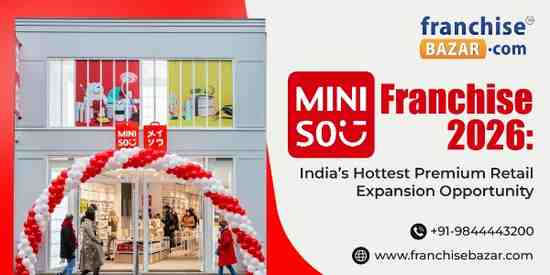
Miniso Franchise 2026: India's Hottest Premium Retail Expansion Opportunity
Written By: Khushboo Verma
Walk into any Miniso outlet and a clear pattern emerges: most customers aren't there with a predefined plan. They step in casually, but once inside, the store layout slows them down. Aisles are arranged to encourage natural browsing, and the variety across categories quietly pulls shoppers further in. This extended browsing time, typically 8 to 15 minutes, higher than most lifestyle retail formats, becomes the starting point of Miniso franchise strong sales performance.
Three behavioural trends matter most:
- Purchases are unplanned, yet feel justified Price points remain within a range where customers make quick decisions. This leads to multiple small additions to the basket.
- Wide category relevance increases conversion Most customers identify at least one category that interests them: stationery, beauty, home utilities or gifting. This broad relevance keeps conversion rates consistently high.
- Frequent product refresh increases visit frequency New SKUs and seasonal collections give customers a reason to return, supporting stable monthly footfall.
These patterns explain why the miniso franchise model converts casual footfall into reliable revenue.
How Customer Behaviour Converts Into Consistent Revenue
Retail is usually a game of needs. Miniso flips it into a game of wants.
Because shoppers don't come for a specific product, the average ticket size grows on its own. No persuasion. No aggressive selling. Just discovery and impulse.
Here's how behaviour translates into business:
- SKU churn stays high New collections and seasonal assortments drive repeat visits. Older SKUs move out fast because novelty drives demand. Product turnover happens every 21 days, with new collections arriving every 7 days.
- Low-ticket products equal higher conversion Shoppers don't overthink small purchases. That means more baskets and fewer walk-outs.
- Natural basket-building drives strong monthly revenue A typical customer leaves with 3 to 6 items, not one.
This psychological mix reduces marketing pressure and gives franchise owners more stable footfall than many retail models.
Miniso's Operational System Is Built for Franchise Efficiency
Product strategy alone isn't what makes Miniso valuable. Its operations are engineered for scalability and store-level discipline.
- Structured product rotation Stores feel fresh every week. Customers notice. They return. Inventory keeps moving.
- Centralised sourcing simplifies everything No vendor negotiations. No price inconsistencies. No sourcing risk. The supply chain is designed to stay uniform across locations.
- Visual merchandising does half the sales work Miniso's store layout naturally pushes movement, interaction and product discovery.
- Staffing remains lean and manageable Most stores run with 8 to 12 people: cashiers, floor staff, one supervisor. No technical specialists, no chefs, no service-trained teams.
- Low operational complexity No cooking. No perishables. No technicians. No daily prep work. No product customization.
This keeps operations predictable, something franchise investors value heavily.
Investment Overview: What a Miniso Franchise Typically Costs in 2026
Initial Investment Range: ₹47 Lakhs to ₹1 Crore
This comprehensive investment covers everything needed to launch your franchise, store design and interiors, fixtures and shelving, branding, opening inventory, POS and tech setup, security systems, initial training, franchise fee, working capital
Space & Staffing Requirements
Store Size: 500 to 1,200 sq. ft. Recommended Staff: 8 to 12 employees
Fee Structure
|
Fee Type |
Amount |
Frequency |
|
Franchise Fee |
₹1.5 lakhs to ₹10 lakhs |
One-time |
|
Royalty Fee |
3% to 7% of gross monthly sales |
Monthly |
|
Marketing Contribution |
2% to 3% of gross monthly sales |
Monthly |
The investment amount varies based on several factors:
- Geographic location
- City tier classification
- Store size selection
All values align with premium lifestyle retail standards, ensuring your franchise meets MINISO's global quality benchmarks.
Revenue & ROI: How These Stores Build Profit Month After Month
Miniso is one of the rare models where sales depend more on behaviour than seasonality.
Expected Monthly Revenue: ₹10 Lakhs to ₹20 Lakhs
Financial Performance Metrics
|
Metric |
Range |
|
Gross Margin |
40% to 50% |
|
Net Margin |
10% to 20% |
|
Breakeven Timeline |
18 to 36 months |
Revenue potential varies based on several factors:
- City tier and location quality
- Mall footfall and positioning
- Operational efficiency
Why These Numbers Stay Consistent
Three forces work constantly to drive profitability:
- Impulse Buying Increases Conversion Rate: Customers make quick purchase decisions based on product discovery.
- Small-Ticket Items Grow the Basket Organically: Multiple low-value items add up without triggering price resistance.
- Product Rotation Pulls Customers Back Frequently: New collections create reasons to revisit, supporting recurring monthly footfall.
Where Miniso Stores Perform Best: A Location Strategy Built for 2026
Some retail concepts work only in malls. Some only in high streets. Miniso works in both, but the performance curve varies.
- Malls Best for high-volume stores. Families, students, professionals – everyone browses. Peak weekend sales support strong month-end numbers.
- High Streets Excellent for steady weekday traffic. Better rental economics than malls. Perfect for impulse shoppers.
- College & Office Belts Ideal for stationery, lifestyle, accessories and plush categories. High conversion even on weekdays.
- Tier 2 & Tier 3 Commercial Zones Brand recall is surprisingly strong outside metros. Growing discretionary spending makes these markets prime expansion zones for 2026.
India Market Context: Why 2026 Matters for Miniso Expansion
Current Market Position
- Store Count: 200+ stores across 120+ cities as of early 2024
- Key Locations: Operating in premium locations including Ambience Mall Vasant Kunj, Phoenix Market City (Bangalore & Chennai), Connaught Place Delhi, and airports in Delhi and Hyderabad.
Recent Performance
- 60 new stores opened in 2022 (highest post-pandemic)
- 80% year-on-year sales growth
- Strong festive demand (27% aromatherapy spike during Diwali)
Strategic Focus Areas
Store Format: Larger format stores in tier 1 and tier 2 cities Digital Expansion: Growing presence on Amazon India and Flipkart Target Segments: Urban and semi-urban consumers adopting branded retail
Market Opportunity
India's organized retail sectoris experiencing rapid expansion as consumption patterns shift toward branded, organized formats. This infrastructure development creates highly favorable conditions for premium lifestyle brands entering the market in 2026.
Challenges Every Investor Should Know Before Opening a Miniso Franchise
A Miniso franchise is attractive, but it requires active management. Here are the key operational realities:
1. Location Is Critical
Miniso thrives on foot traffic and impulse browsing. Low-footfall zones won't deliver results. Mall rentals in tier 1 cities range from ₹2 lakhs to ₹10 lakhs monthly, directly impacting profitability.
2. Mall Revenue-Share Agreements
Mall operators may claim 10% to 15% of gross monthly sales under revenue-share models. These agreements require strict monitoring to protect margins.
3. Disciplined Inventory Management
- Product turnover: Every 21 days
- New collections: Every 7 days
- Initial inventory capital: ₹30 lakhs to ₹50 lakhs locked
Slow sellers need quick clearance. Fast sellers need accurate reorder cycles. Stock discipline is non-negotiable.
4. Ongoing Fee Structure Impact
On a store generating ₹15 lakhs monthly revenue:
- Royalty fees (3% to 7%): ₹45,000 to ₹1.05 lakhs
- Marketing contribution (2% to 3%): ₹30,000 to ₹45,000
- Combined monthly fees: ₹75,000 to ₹1.50 lakhs
5. Competitive Landscape
India's lifestyle retail segment includes both international and domestic brands offering similar product ranges at comparable price points. Differentiation comes from execution quality and location selection.
6. Operational Consistency
The model is simple, but success requires daily discipline: fresh displays, engaged staff, organized stockrooms. Consistency drives quality, which drives sales.
Why Miniso Is Viewed as 2026's Hottest Premium Retail Expansion Bet
1. Affordable Premium Category
Price range: ₹50 to ₹500 for most products
This sweet spot between attractive design and accessible pricing aligns perfectly with India's growing middle class spending patterns, expanding the customer base beyond niche lifestyle brands.
2. Consumer Psychology Over Heavy Marketing
The browsing experience drives sales:
- People come to browse
- People stay to explore
- People leave with a basket
This behavioral pattern is incredibly hard for competitors to replicate.
3. Built-In Newness Model
The store transforms every few weeks with fresh collections. This constant refresh drives frequency, loyalty, and consistent revenue without additional marketing spend.
4. Proven Global Track Record
- 7,500+ stores across 100+ countries (end of 2024)
- 1,200+ net new stores added globally in 2024 (record expansion)
This proven business model reduces execution risk across diverse markets.
5. India's Perfect Timing
- 65% of population under 35 fueling lifestyle spending
- Organized retail sector in rapid expansion
- Infrastructure development across tier 1, 2, and 3 cities improving access to quality locations
Structured supply chain + lean operations + favorable market timing = one of the most bankable premium retail investments for 2026.
Final Word
Franchises succeed when three things align: predictable consumer behaviour, stable unit economics, manageable operations.
Miniso aligns all three. It does not rely on special occasions, discounts, or targeted marketing. It relies on what shoppers naturally do: explore, browse, pick, and buy.
For investors who secure a strong location and maintain operational discipline, the miniso franchise offers one of the most compelling, visually-driven and financially steady retail opportunities heading into 2026. The model has proven global scalability, delivers consistent unit economics, and operates in a growing market segment with long-term demographic tailwinds.
However, success requires commitment beyond capital investment. It demands attention to location selection, inventory management, staff engagement, and daily operational consistency. Franchisees who approach this as an active business rather than passive investment will find the miniso franchise model offers genuine potential for profitable retail operations in India's expanding organized retail landscape.
Disclaimer: The brands mentioned in this blog are the recommendations provided by the author. FranchiseBAZAR does not claim to work with these brands / represent them / or are associated with them in any manner. Investors and prospective franchisees are to do their own due diligence before investing in any franchise business at their own risk and discretion. FranchiseBAZAR or its Directors disclaim any liability or risks arising out of any transactions that may take place due to the information provided in this blog.
Recent Blogs

Are you looking to invest in India's premium laundry...

Picking the right master franchise in India for 2027 isn’t...

Mahilaon ke liye best franchise business kaun sa hai? Seedha jawab:...
Introduction
India’s...

Why Should I Register?
You are seeking to access information which is provided only to registered members. It takes less than a minute to register and access information on FRANCHISEBAZAR.