
Moti Mahal Delux Franchise 2026: ROI, Risks & Real Numbers
Written By: Khushboo Verma
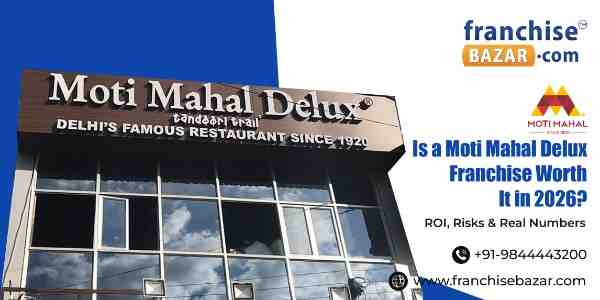
Few restaurant brands in India carry the historical weight that Moti Mahal Delux does. Before North Indian cuisine became common across malls and high streets, Moti Mahal was already shaping modern Indian dining. Butter chicken, dal makhani, and tandoori chicken are pillars of India's restaurant economy today. But legacy alone does not justify investment in 2026. Rising rentals, delivery platform commissions, manpower shortages, and competition mean that every franchise decision must be evaluated on unit economics. This raises one unavoidable question: is a moti mahal delux franchise still worth the investment in 2026?
This article breaks down the real investment cost, revenue potential, margins, break-even timelines, operational risks, and investor suitability using practical franchise economics.
The Moti Mahal Delux Business Model
Moti Mahal Delux operates in the casual dining restaurant segment. This matters because casual dining depends heavily on seating capacity, ambience, and repeat family visits rather than impulse purchases.
The brand's business model includes:
- Full-service dine-in restaurant
- North Indian and Mughlai cuisine focus
- Tandoor-driven kitchen operations
- Takeaway and delivery as secondary channels
A moti mahal delux franchise is designed to be a destination restaurant, not a volume-driven food counter. This affects both capital requirement and return timelines.
Franchise Cost Breakdown in 2026
The investment required for a moti mahal delux franchise varies based on format and location. According to official sources, the investment ranges from ₹35 lakhs to ₹1.2 crore depending on the outlet type.
Investment Range by Format
|
Format Type |
Total Investment |
Space Required |
|
|
₹35-50 lakhs |
400-600 sq. ft. |
|
Casual Dining |
₹50 lakhs-1 crore |
1500-2500 sq. ft. |
|
Fine Dining |
₹1-1.2 crore |
3000-5000 sq. ft. |
Capital Breakdown (Casual Dining Format)
- Franchise fee and brand onboarding: ₹10-15 lakhs
- Interior fit-outs and furniture: ₹20-35 lakhs
- Kitchen equipment, tandoor, exhaust systems: ₹15-25 lakhs
- Licenses, deposits, and pre-opening costs: ₹8-12 lakhs
- Initial working capital buffer: ₹10-15 lakhs
Investors must plan for 6-8 months of operational runway post-launch.
Revenue and Ticket Size
Revenue performance depends on location quality, seating capacity, and food consistency. Unlike QSR brands where volume compensates for lower ticket sizes, this format relies on higher per-table billing.
Monthly Revenue (Standard Casual Dining Outlet)
For 1500-2500 sq. ft. outlets:
- Monthly gross revenue: ₹20-40 lakhs
- Average order value: ₹900-1,300
- Daily covers: 60-120 on weekdays, more on weekends
Delivery platforms like Zomato and Swiggy contribute 20-30 percent of monthly sales. Dine-in remains the main profitability driver for the moti mahal delux franchise model.
Restaurants near corporate zones, premium residential areas, or hospitality corridors achieve the higher end of this range.
Cost Structure and Margins
Understanding the cost stack is critical before investing. Based on industry standards and casual dining benchmarks:
Cost Ratios (Casual Dining Format)
|
Cost Component |
Percentage of Revenue |
|
Food cost |
30-38% |
|
Staff and manpower |
12-18% |
|
Rent |
8-12% |
|
Utilities and overheads |
4-6% |
|
Marketing and miscellaneous |
2-4% |
|
Royalty fees |
6-8% |
Profitability Numbers
- Gross margin: 60-65 percent
- Net profit margin: 15-20 percent (after stabilization)
- Net monthly profit (stabilized): ₹3-7 lakhs
Well-run outlets that maintain food consistency and control rent below 10 percent tend to outperform these averages. The moti mahal delux franchise offers competitive margins within the casual dining segment.
ROI and Break-Even Timeline
This is not a fast-payback franchise. According to official sources and industry data:
- Break-even period: 18-36 months (varies by format)
- Payback timeline: 24-42 months
- Annual ROI after stabilization: 18-25 percent
What Speeds Up Payback
- Strong location with high visibility
- Corporate catering orders
- Controlled rental costs (below 10% of revenue)
- Efficient kitchen operations with minimal staff churn
If rentals exceed 12 percent of revenue or kitchen operations suffer from staff churn, the break-even period extends for any moti mahal delux franchise.
Why Investors Still Consider This Franchise
Strong Brand Recognition
Moti Mahal Delux has generational brand recognition. Families look for it when choosing North Indian dining. This reduces the marketing effort needed to attract first-time customers.
Stable Menu
The menu is not trend-driven. Butter chicken, dal makhani, kebabs, and naan-based meals do not lose relevance. Sales are more predictable than experimental cuisines.
Company-Managed Operations
Moti Mahal offers a Franchise Owned, Company Managed (FOCM) model. The company manages daily operations, reducing the burden on franchisees. This appeals to NRIs and investors without restaurant experience.
Multiple Revenue Channels
Many outlets add to dine-in revenue with:
- Corporate catering contracts
- Bulk party orders
- Festive and wedding season bookings
- Cloud kitchen operations
These channels improve cash flow during peak months.
Investment Risks
High Fixed Costs
Rent, salaries, and utilities stay constant regardless of footfall. A weak location damages profitability quickly for any moti mahal delux franchise.
Kitchen Staff Dependency
Consistency depends on trained chefs and tandoor operators. Staff churn directly affects food quality and repeat business.
Market Competition
Premium North Indian dining faces competition from:
- Established casual dining chains
- Five-star hotel restaurants
- Strong local standalone restaurants
- Cloud kitchen brands
Long Capital Lock-In
Investors looking for quick exits or short-term gains will find the moti mahal delux franchise unsuitable. Capital stays locked for 2-3 years minimum.
Location Strategy
Successful outlets are found in:
- Premium residential areas
- High-street commercial zones
- Business districts with corporate lunch demand
- Hospitality-heavy neighborhoods
Visibility, parking access, and ambience matter more than raw footfall for this brand. A poor location can derail profitability regardless of brand strength.
Who Should Invest
This franchise suits:
- High-net-worth individuals with ₹50 lakh to ₹1.2 crore capital
- Experienced restaurant operators who understand hospitality
- Family business owners seeking a prestige dining brand
- NRI investors preferring company-managed operations
- Investors focused on long-term, stable cash flow
It does not suit first-time entrepreneurs without restaurant experience or those seeking low-investment formats.
Franchise Comparison
|
Brand |
Investment Range |
Break-Even Period |
Profit Margin |
|
Moti Mahal Delux |
₹35L-₹1.2Cr |
18-36 months |
15-20% |
|
Domino's |
₹30-50L |
18-24 months |
15-22% |
|
KFC |
₹1-2Cr |
24-36 months |
10-15% |
|
Haldiram's |
₹30-50L |
18-30 months |
20-30% |
The moti mahal delux franchise offers competitive returns within its segment, with the added advantage of heritage brand value.
The 2026 Market Scenario
India's food franchise industry is growing at 18-20% annually. Several factors are reshaping the landscape:
- Rising demand for heritage and authentic cuisine
- Shift toward company-managed franchise models
- Growing appetite in Tier 2 and Tier 3 cities
- Increased focus on digital integration and delivery
Established brands like Moti Mahal Delux with proven systems stand to benefit from market expansion.
Support from the Franchisor
Moti Mahal Delux provides franchisees with:
- Site selection assistance and market analysis
- Complete training for kitchen staff and management
- Standard operating procedures for consistency
- Marketing and promotional support
- Supply chain management for ingredients
- Regular quality audits and performance reviews
The FOCM model means the company handles daily operations, which reduces the franchisee's operational burden but also means less control over day-to-day decisions.
Hidden Costs to Watch
Beyond the initial investment, investors should budget for:
- Annual maintenance and equipment replacement (₹2-4 lakhs)
- Staff training and recruitment costs (₹1-2 lakhs annually)
- Local marketing and events (₹50,000-1 lakh per quarter)
- Technology upgrades for POS and ordering systems
- Renewal fees after the initial contract period
These costs can add 3-5 percent to your annual operating expenses.
Tax and Legal Considerations
Operating a restaurant franchise involves multiple regulatory requirements:
- GST registration and compliance (18% on restaurant services)
- FSSAI license for food business operation
- Trade license from local municipal authority
- Fire safety and health department clearances
- Liquor license if serving alcohol (state-dependent)
- Shop and establishment act registration
- Professional tax registration in applicable states
Legal and compliance costs can range from ₹2-5 lakhs annually depending on the state and city. Cities like Mumbai and Delhi have stricter compliance requirements compared to tier 2 cities. Factor in legal consultation fees of ₹50,000-1 lakh during setup.
Financing Options for the Franchise
Most banks and NBFCs offer franchise financing for established brands like Moti Mahal Delux. Typical financing options include:
- Bank loans covering 60-70% of project cost
- Interest rates ranging from 10-14% per annum
- Repayment tenure of 5-7 years
- Collateral requirements vary by lender
SBI, HDFC, and ICICI have dedicated franchise financing schemes. The moti mahal delux franchise qualifies under MSME lending programs in most cases, which can mean lower interest rates and easier approvals.
Operational Challenges You Will Face
Running this franchise comes with day-to-day challenges:
- Staff Management: Finding and retaining skilled tandoor chefs is difficult. The market for experienced North Indian chefs is competitive, and poaching is common.
- Food Cost Control: Ingredient prices fluctuate, especially for dairy products and chicken. A 2-3% increase in food costs can wipe out monthly profits if not managed properly.
- Delivery Platform Commissions: Zomato and Swiggy charge 18-25% commission on orders. This eats into margins significantly. Some franchisees limit delivery to maintain profitability.
- Quality Consistency: Maintaining taste consistency across shifts and staff changes is the biggest operational challenge for any moti mahal delux franchise.
Final Verdict
A moti mahal delux franchise in 2026 is a serious restaurant investment, not a speculative food business. It offers stability, brand strength, and decent long-term returns for investors who understand restaurant economics.
When It Works
The franchise works when:
- Location selection is strategic and well-researched
- Cost control is disciplined from day one
- Kitchen operations maintain consistency
- Investor has realistic expectations about payback timelines
When to Avoid
Investors should reconsider if:
- Capital availability is limited
- Location options are weak
- Quick returns are expected
- Restaurant experience is absent
For patient investors who value structured growth over quick returns, Moti Mahal Delux remains a viable casual dining franchise opportunity in India. The brand's heritage, combined with company-managed operations and multiple revenue streams, creates a foundation for sustainable profitability. Success depends more on execution quality and location selection than on brand legacy alone.
Disclaimer: The brands mentioned in this blog are the recommendations provided by the author. FranchiseBAZAR does not claim to work with these brands / represent them / or are associated with them in any manner. Investors and prospective franchisees are to do their own due diligence before investing in any franchise business at their own risk and discretion. FranchiseBAZAR or its Directors disclaim any liability or risks arising out of any transactions that may take place due to the information provided in this blog.
Recent Blogs
So, you’re thinking about joining India’s quick-service...
Thinking about opening a convenience store in India in 2027? You may...

If you are researching a Tumbledry franchise in India...

Biggies Burger is making waves in India’s burger scene,...

Why Should I Register?
You are seeking to access information which is provided only to registered members. It takes less than a minute to register and access information on FRANCHISEBAZAR.