
Franchise Opportunities in India: Cost, Profit, ROI and Break-Even Explained

Written By: Resham Daswani
For most first-time investors in India, the biggest confusion around franchising is not which brand to choose, but how the numbers actually work.
Everyone talks about franchise opportunities in India. Very few explain what really matters after the agreement is signed:
- How much money actually goes out
- How long before money comes back
- What “profit” really looks like month after month
- And when the business genuinely breaks even
By 2026, investors are no longer satisfied with glossy brochures or headline claims. They want clarity around cost, profit, ROI, and break-even—not in theory, but in practical terms.
This article is written for investors who want to understand franchising as a financial decision, not just a business idea.
Why This Topic Matters More in 2026
The Indian franchise ecosystem has matured significantly.
Investors today are:
- more cautious with capital
- more aware of failure stories
- less impressed by “high returns” without data
At the same time, franchisors are offering more formats:
- low-investment models
- asset-light service franchises
- city-specific rollouts
This makes opportunity selection harder, not easier.
Understanding unit economics—costs, margins, timelines—is now the real differentiator between smart franchise investors and emotional ones.
Understanding Franchise Cost: What Investors Often Miss
People who want to buy a business want to know how much it costs., they usually mean the entry amount. But in reality, franchise cost has multiple layers.
1. Initial Investment (Visible Cost)
This typically includes:
- franchise fee
- interiors and setup
- equipment or inventory
- initial branding and launch expenses
This is the number most brochures highlight.
However, this is only the starting point, not the full picture.
2. Operating Capital (The Silent Requirement)
Many franchise failures happen not because the business model is bad, but because investors underestimate working capital.
Operating capital is needed for:
- salaries
- rent
- utilities
- marketing
- inventory replenishment
Especially in the first 6–9 months, revenue is uneven while expenses are fixed.
Investors who plan only for setup costs often feel financial pressure much earlier than expected.
3. Ongoing Fees & Royalties
Most franchises include:
- monthly royalty (percentage or fixed)
- marketing or brand fund contributions
These directly affect net profit, not revenue.
Ignoring these while calculating returns leads to unrealistic expectations.
Typical Cost Structure of a Franchise in India (2026)
While costs vary by sector, most franchise opportunities in India follow a similar structure.
|
Cost Component |
What It Covers |
|
Franchise fee |
Brand rights, training, systems |
|
Setup & interiors |
Location fit-out, branding |
|
Equipment / inventory |
Sector-specific assets |
|
Working capital |
3–6 months of operations |
|
Ongoing royalties |
Brand usage & support |
Investor insight: A “low-cost” franchise on paper can still fail if working capital is not planned properly.
What Profit Really Means in Franchising
One of the most misunderstood words in franchise discussions is profit.
Many investors confuse:
- revenue with profit
- gross margin with net earnings
In franchising, profit is what remains after all fixed and variable costs are paid.
This includes:
- rent
- staff salaries
- utilities
- royalties
- local marketing
- wastage or inefficiencies
Only what remains after these is true profit.
Typical Monthly Profit Ranges (Reality Check)
In 2026, across most sectors, franchise profitability tends to fall into broad ranges.
|
Monthly Revenue |
Net Profit Range |
|
₹2–3 lakhs |
₹30k – ₹70k |
|
₹3–5 lakhs |
₹70k – ₹1.2 lakhs |
|
₹5–8 lakhs |
₹1–2 lakhs |
These are post-expense numbers, assuming disciplined execution.
Higher profit is usually linked to:
- tighter cost control
- repeat customers
- experienced operators
ROI Explained Simply
ROI, or Return on Investment, sounds complex but is straightforward in practice.
It answers one question:
The inquiry pertains to the duration of time required for the investment to yield a return.
If you invest ₹15 lakhs and make ₹1 lakh profit per month:
- annual profit = ₹12 lakhs
- ROI timeline = roughly 15 months (before tax)
However, real ROI calculations must consider:
- ramp-up time
- initial low-profit months
- reinvestment in growth
Which means ROI is rarely linear.
Why ROI Looks Different in the First Year
Most franchise businesses follow a stabilisation curve.
- Months 1–3: setup and low traction
- Months 4–6: improving consistency
- Months 7–12: clearer profit patterns
Expecting full ROI behaviour from month one is unrealistic.
Experienced investors evaluate ROI over 24–36 months, not weeks.
Break-Even: The Most Important Milestone
Break-even is not the same as profit.
A franchise breaks even when:
- monthly revenue = monthly expenses
- the business no longer requires external funding
This is the point where the business becomes financially self-sustaining.
Most healthy franchise models in India aim to break even within:
- 6–12 months (asset-light services)
- 9–18 months (retail, food, education)
Delayed break-even is not always a red flag—but it must be explained.
Why Break-Even Matters More Than ROI Initially
For first-time investors, break-even is psychologically and financially critical.
Before break-even:
- stress is higher
- cash pressure is constant
- decision-making becomes emotional
After break-even:
- confidence improves
- operations stabilise
- profit optimisation becomes possible
Smart investors prioritise early break-even, not just high ROI projections.
How Cost, Profit, ROI and Break-Even Are Interconnected
These four numbers do not exist independently.
- Higher costs usually delay break-even
- Faster break-even improves ROI
- Controlled costs protect profit margins
Evaluating a franchise without looking at all four together leads to incomplete decisions.
This is why seasoned investors ask fewer questions about “returns” and more about structure and sustainability.
How Sector Choice Changes Cost, Profit and ROI
Not all franchise sectors behave the same financially. Two businesses with identical investments can deliver very different outcomes depending on how money flows through the model.
Below is a practical view of how major franchise sectors behave in 2026.
Sector-Wise Financial Behaviour (Reality-Based)
|
Sector Type |
Typical Investment |
Profit Pattern |
Break-Even Timeline |
|
Education & training |
Medium |
Stable, recurring |
9–15 months |
|
Food & QSR |
Medium–High |
High revenue, tight margins |
12–18 months |
|
Healthcare & diagnostics |
Medium |
Consistent, low volatility |
8–14 months |
|
Service-based franchises |
Low–Medium |
Lean, predictable |
6–12 months |
|
Retail formats |
Medium–High |
Volume-driven |
12–24 months |
Investor insight: Sectors with repeat customers and low wastage usually reach break-even faster—even if their top-line growth is slower.
How City Selection Impacts ROI More Than Most Investors Expect
City economics quietly influence every financial metric.
Two identical franchise outlets can show very different ROI simply because of where they are located.
Why Location Alters the Numbers
- Rent structures vary widely
- Staffing costs change by city tier
- Customer price sensitivity differs
- Competition density affects margins
ROI Behaviour by City Type
|
City Type |
Cost Pressure |
ROI Stability |
|
Tier-1 metros |
Very high |
Volatile |
|
Metro suburbs |
Moderate |
Balanced |
|
Tier-2 cities |
Lower |
Strong |
|
Tier-3 cities |
Low |
Stable (if demand exists) |
In 2026, many investors are discovering that Tier-2 cities often deliver the best risk-adjusted ROI, not metros.
Common ROI & Break-Even Calculation Mistakes Investors Make
Even smart investors miscalculate franchise economics—often unintentionally.
Mistake 1: Assuming Day-One Performance
ROI models often assume consistent revenue from month one. In reality, most franchises need 6–9 months to stabilise.
Mistake 2: Ignoring Owner Involvement
If the owner plans to be absent, staffing and control costs rise—directly impacting profit.
Mistake 3: Underestimating Fixed Costs
Rent, salaries, and utilities do not wait for revenue to grow. These costs define break-even speed.
Mistake 4: Treating Gross Margin as Profit
Gross margin looks attractive, but net profit is what pays back your investment.
What a Realistic Franchise Financial Timeline Looks Like
Understanding the timeline reduces emotional decision-making.
A Typical 24-Month Franchise Journey
- Months 1–3: Setup, low traction, learning curve
- Months 4–6: Revenue consistency improves
- Months 7–12: Break-even achieved in healthy models
- Months 13–24: Profit optimisation and ROI visibility
This timeline varies by sector, city, and execution—but the pattern is consistent.
How Experienced Investors Evaluate ROI Differently
First-time investors often ask:
“How much will I earn?”
Experienced investors ask:
- How fast do I break even?
- How sensitive is profit to cost increases?
- What happens if revenue drops 15%?
- How easily can this model be replicated or exited?
ROI becomes meaningful only when these questions have answers.
Cost Control: The Silent Driver of Franchise Success
In franchising, cost discipline is often more important than revenue growth.
Areas where small savings compound:
- rent negotiations
- staff scheduling
- inventory wastage
- local marketing efficiency
A 5–10% improvement in cost control can accelerate break-even by several months.
How This Fits Into the Bigger Franchising Picture
When investors zoom out and look at the Indian franchising landscape in 2026, a clear pattern emerges:
- Sustainable franchises prioritise unit economics
- Growth-focused brands still emphasise break-even clarity
- Investors increasingly value predictability over hype
Understanding cost, profit, ROI and break-even together helps investors choose franchises that survive beyond launch.
FAQs: Franchise Cost, Profit, ROI and Break-Even
How much working capital should I keep aside? Ideally, 3–6 months of fixed operating expenses.
Is faster break-even always better? Not necessarily. Break-even must be achieved without sacrificing quality or sustainability.
Can ROI change after the first year? Yes. Most franchises see improved ROI after stabilisation and cost optimisation.
Do higher investment franchises always earn more? No. Higher investment often brings higher risk unless supported by strong demand.
Is ROI the same across all cities? No. City economics significantly affect margins and timelines.
A Simple Checklist Before You Invest
Before finalising any franchise opportunity, ensure you can answer:
- What is my total cost, not just entry cost?
- When do I realistically break even?
- What is my monthly net profit after all expenses?
- How sensitive is ROI to rent or salary increases?
- Do I have enough buffer for the first year?
If these answers are unclear, the opportunity needs deeper evaluation.
Final Takeaway for 2026 Franchise Investors
Franchise opportunities in India are no longer judged by brand appeal alone.
In 2026, successful investors focus on:
- disciplined cost structures
- realistic profit expectations
- achievable break-even timelines
- sustainable ROI, not aggressive projections
When cost, profit, ROI and break-even are understood together, franchising becomes a measured investment decision, not a leap of faith.
Disclaimer: The brands mentioned in this blog are the recommendations provided by the author. FranchiseBAZAR does not claim to work with these brands / represent them / or are associated with them in any manner. Investors and prospective franchisees are to do their own due diligence before investing in any franchise business at their own risk and discretion. FranchiseBAZAR or its Directors disclaim any liability or risks arising out of any transactions that may take place due to the information provided in this blog.
Recent Blogs

SMEs require services in bookkeeping, GST, payroll, tax compliance,...

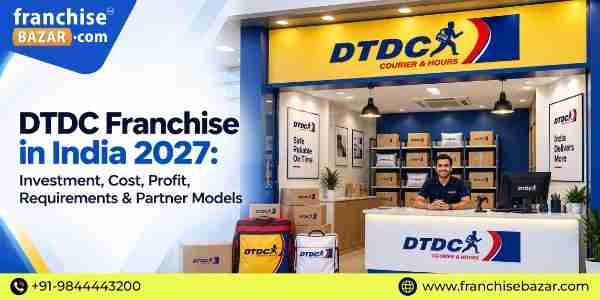
If you are looking for a DTDC...

Quick Answer for Busy Investors:
If you are shortlisting...

Why Should I Register?
You are seeking to access information which is provided only to registered members. It takes less than a minute to register and access information on FRANCHISEBAZAR.