
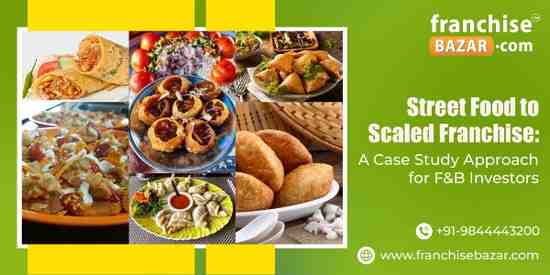
Street Food to Scaled Franchise: A Case Study Approach for F&B Investors
Written By: Khushboo Verma
Walk through any Indian market in February 2026 and the pattern becomes clear. A pani puri vendor serves 200 customers daily. A kathi roll counter sells out before evening. A vada pav stall has queues stretching onto the road every morning and evening.
Street food remains India's most powerful food category. However, what changed dramatically over the last decade is structure. Local vendors are now converting into organized brands with backend systems. Small concepts are becoming franchise networks with standardized operations. For F&B investors in 2026, this shift creates a compelling opportunity.
The question today is not whether street food works as a business model. It clearly does. The real question is whether a specific brand has the operational maturity and depth to scale beyond the first location without losing quality or profitability.
Why This Transition Matters Right Now
According to FICCI industry reports, the Indian street food industry is growing at 10 percent CAGR and is expected to reach ₹80,000 crores by 2026. Additionally, the broader foodservice market will grow from USD 85.19 billion in 2025 to USD 93.97 billion in 2026, showing robust expansion.
This growth comes from four specific shifts happening simultaneously:
- Tier-2 and Tier-3 cities driving unprecedented consumption growth
- Hygiene-conscious customers preferring organized outlets over roadside vendors
- Delivery platforms like Swiggy and Zomato expanding into 500+ cities
- Youth population (median age 28) seeking affordable, quick meal options
These trends strengthen the street food franchise model directly. Consumers increasingly choose structured outlets offering predictable quality over traditional unorganized carts.
Case Study 1: Kathi Junction - Regional Roll to National QSR
Kathi rolls began as Kolkata street food sold from pushcarts. Kathi Junction formalized this beloved snack into a scalable franchise system that now operates across India.
Brand Profile
- Established: 2009
- Current outlets: 150+ locations across India
- Investment required: ₹8-12 lakhs
- Space needed: 200-600 sq ft depending on format
- ROI period: 12-18 months
- Daily sales potential: ₹10,000-12,000 in high-footfall areas
Why This Model Works
The brand offers three distinct format options to franchisees:
- Express counter format (200 sq ft) for food courts
- Dine-in outlet format (300-600 sq ft) for high streets
- Food court kiosk model for mall locations
Standardization happens through multiple control points:
- Centralized spice mix supply from company warehouse
- Pre-trained chef deployment to each location
- Fixed cooking protocols that cannot be modified
- Uniform packaging across all touchpoints
- Regular quality audits by company representatives
Financial Structure
|
Component |
Amount |
|
Franchise fee |
₹3.5 lakhs + GST |
|
Infrastructure setup |
₹4-5 lakhs |
|
Kitchen equipment |
₹2-3 lakhs |
|
Initial inventory |
₹1 lakh |
|
Total investment |
₹8-12 lakhs |
|
Royalty structure |
2% of revenue + GST |
|
Marketing fee |
1% of revenue |
Average daily sales in high-footfall locations range from ₹10,000-12,000. Monthly revenue potential: ₹3-3.6 lakhs.
Profitability Snapshot
At ₹12,000 daily sales:
- Monthly revenue: ₹3.6 lakhs
- Food cost: 35-40% (₹1.26-1.44 lakhs)
- Gross margin: 60-65%
- Net profit after expenses: 22-28%
Investor Insight
Kathi Junction demonstrates how format flexibility enables faster expansion. The same brand operates successfully in malls, high streets, and food courts. This diversity reduces location dependency risk significantly.
Moreover, delivery integration plays a crucial role. Over 60 percent of orders now come through Zomato and Swiggy platforms. Therefore, any street food franchise ignoring aggregator economics will face serious growth limits going forward.
The brand's no-royalty alternative (some reports suggest zero royalty structure) makes it particularly attractive for cost-conscious investors looking to maximize margins.
Case Study 2: Momo Nation Cafe - Delivery-First Cloud Strategy
While momos existed on Indian streets for decades, Momo Nation Cafe built a delivery-optimized model instead of traditional retail-heavy expansion. This strategic difference matters significantly in 2026.
Brand Profile
- Founded: October 2016
- Current outlets: 100+ outlets in 45 cities
- Investment required: ₹6-8 lakhs (takeaway format), ₹10-12 lakhs (fine dining format)
- ROI period: 8-10 months (one of the fastest in the category)
- Menu depth: 70+ varieties including fusion options
- Daily order capacity: 150-200 orders per location
Operational Approach
- The brand focuses on four key operational pillars:
- Compact kitchen formats ranging from 150-400 sq ft
- Fresh, non-frozen preparation (major USP against competitors)
- Lean staffing models with 3-10 people based on format
- High delivery throughput optimized for aggregator platforms
Investment Breakdown
|
Component |
Takeaway Model |
Dining Model |
|
Total investment |
₹8-10 lakhs |
₹10-12 lakhs |
|
Space required |
150-200 sq ft |
200-400 sq ft |
|
Staff needed |
3-5 people |
6-10 people |
|
Equipment cost |
₹2-3 lakhs |
₹3-4 lakhs |
|
Monthly revenue potential |
₹2.5-3 lakhs |
₹3.5-4 lakhs |
|
Expected net margin |
25-28% |
28-32% |
Profit margins range from 25-30 percent depending on location rent and delivery mix.
What Sets It Apart
Unlike traditional momos brands that follow rigid menus, Momo Nation Cafe offers menu customization based on regional preferences. Franchisees can adapt 20-30 percent of offerings to local tastes while maintaining core recipes for consistency.
Additionally, the brand operates on the FOFO model (Franchise Owned, Franchise Operated). This ensures quality control without heavy corporate overhead that burdens many other franchise systems.
The brand also provides complete training programs:
- 15-day operational training at existing outlets
- Recipe standardization workshops
- Vendor connection for raw materials
- Marketing support through digital channels
Investor Insight
Low entry investment starting at ₹6 lakhs makes this accessible to first-time entrepreneurs without deep pockets. However, success depends heavily on two factors: delivery platform integration and kitchen efficiency management.
Fast ROI of 8-10 months works only when daily throughput consistently reaches 150-200 orders. Consequently, location selection near colleges, IT offices, or high-density residential areas becomes absolutely critical for success.
The brand's expansion into Tier-2 cities like Indore, Jaipur, and Coimbatore shows strong potential beyond metros where rent is lower and competition less intense.
Case Study 3: Goli Vada Pav - Hyper-Local Snack to Pan-India Brand
Vada pav has always been Mumbai's iconic street snack, sold from countless carts across the city. Goli Vada Pav brought hygiene standards, branding, and systematic operations to this beloved category.
Brand Profile
- Founded: 2004 by Venkatesh Iyer
- Current outlets: 350+ outlets in 21 states
- Investment required: ₹10-12 lakhs
- Daily sales potential: 70,000-100,000 vada pavs sold brand-wide
- Space needed: 250-300 sq ft
- Average ticket size: ₹40-50 per customer
Business Model
The brand relies on five operational pillars:
- Central factory production facility in Mumbai
- Frozen vada delivery to all outlets ensuring consistency
- Quick service counters with minimal seating
- Impulse purchase strategy targeting commuters
- Menu expansion beyond core product (pav bhaji, rolls, fries, beverages)
Cost Structure
|
Component |
Amount |
|
Franchise fee |
₹2-4 lakhs |
|
Infrastructure and interiors |
₹4-5 lakhs |
|
Kitchen equipment |
₹2-3 lakhs |
|
Initial inventory stock |
₹2 lakhs |
|
Working capital buffer |
₹1-2 lakhs |
|
Total investment |
₹10-12 lakhs |
|
Royalty structure |
Zero (major advantage) |
Monthly revenue potential in good location: ₹3.6-5 lakhs depending on footfall.
Profitability Framework
At ₹12,000 daily sales scenario:
- Monthly revenue: ₹3.6 lakhs
- Food and material cost: 40%
- Rent: 12-15%
- Staff salaries: 15-18%
- Profit margin: 25%
- Monthly net profit: ₹90,000
At ₹18,000 daily sales scenario:
- Monthly revenue: ₹5.4 lakhs
- Improved cost efficiency at scale
- Profit margin: 30-35%
- Monthly net profit: ₹1.6-1.9 lakhs
Investor Insight
Goli Vada Pav proves that hyper-local products can scale nationally when proper systems replace chaos. Central production ensures taste consistency across 350 outlets spread across India.
However, volume dependency is very real in this model. The brand absolutely needs high footfall zones to maintain profitability targets. Rent exceeding 15 percent of revenue compresses margins quickly and threatens viability.
The zero-royalty model makes this particularly attractive for investors who want to retain maximum profits at the unit level.
Financial Patterns Across These Street Food Franchise Models
Despite offering different products, several common themes emerge across all three case studies:
Investment Range Consistency
All three brands operate in the ₹6-12 lakh investment bracket. This makes street food franchise opportunities significantly more accessible compared to premium QSR formats requiring ₹25-50 lakhs initial capital.
ROI Timeline Comparison
- Momo Nation: 8-10 months (fastest)
- Kathi Junction: 12-18 months (moderate)
- Goli Vada Pav: 18-24 months (longer but stable)
Therefore, payback periods under 2 years attract capital-constrained entrepreneurs looking for quicker returns on investment.
Space Efficiency
All three operate comfortably in 150-600 sq ft range. Smaller footprints deliver multiple advantages:
- Significantly lower rental burden
- Easier location availability in prime areas
- Faster setup and launch time
- Lower fit-out costs
Margin Structure Reality
Gross margins typically range 25-35 percent after deducting direct food costs. However, net margins depend heavily on three controllable factors:
- Rent percentage (ideal target: under 15% of revenue)
- Staff efficiency and productivity management
- Delivery commission impact (20-30% on aggregator orders)
5 Critical Factors That Make a Street Food Franchise Actually Profitable
Based on analyzing these three case studies in depth, five critical factors determine long-term success:
1. Product Simplicity
Complex menus kill service speed and kitchen efficiency. Kathi Junction offers 25 variants but core preparation methodology stays simple and replicable. Goli Vada Pav focuses on one hero product with complementary sides.
2. Backend Standardization
Central kitchens or standardized sourcing protocols ensure consistency across locations. Momo Nation supplies pre-mixed spice blends. Goli Vada Pav sends frozen vadas directly from its Mumbai factory to all its outlets.
3. Format Flexibility
Successful brands operate across kiosks, high streets, malls, and cloud kitchens. Single-format dependency creates serious expansion bottlenecks and limits growth potential.
4. Delivery Integration
In February 2026, aggregator economics simply cannot be ignored. Brands earning 60-70 percent revenue through Swiggy and Zomato must factor 20-30 percent commission into unit economics calculations from day one.
5. Location Discipline
All three brands emphasize specific high-footfall zones:
- College and university clusters
- IT corridors and office parks
- Residential hubs with 1,000+ apartments
- Metro and railway stations
- Dense commercial zones
Risks Investors Must Carefully Evaluate
Despite strong fundamentals, several risks exist in this category:
Oversupply in Premium Areas
Shopping malls and food courts in major cities are becoming too crowded. Five different momo brands in one food court cannibalize each other's sales. Therefore, detailed location analysis must precede investment enthusiasm.
Aggregator Dependency
Brands earning 70 percent revenue through delivery platforms face serious margin pressure when these platforms increase commission rates from 20 to 30 percent.
Working Capital Management
Inventory, advance rent, and salaries need 3-4 months buffer capital beyond the initial franchise investment. Undercapitalization causes premature closure despite generating decent sales.
Final Perspective
Street food has always existed across India. What fundamentally changed is structure, branding, and true scalability.
The brands analyzed demonstrate different pathways. Kathi Junction scaled a regional product through format flexibility. Momo Nation built a delivery-first cloud expansion model. Goli Vada Pav successfully nationalized a hyper-local Mumbai snack.
For investors in 2026, the opportunity lies in selecting a street food franchise that combines strong unit economics, backend control systems, technology integration, and responsible franchising pace with genuine support.
Street food may start on the pavement. However, with the right operational systems, it builds sustainable national networks. The difference lies not in the product itself, but in the discipline and structure behind scaling it systematically.
Ready to Explore Street Food Franchise Opportunities?
Browse verified street food franchise listings on FranchiseBAZAR to compare investment requirements, expected returns, and franchise support across multiple brands. Connect with experienced franchise consultants who can match you with opportunities based on your budget, location preferences, and operational capacity.
Whether you're looking at momos, kathi rolls, vada pav, or other street food concepts, making an informed decision starts with understanding real unit economics and franchisee experiences. Start your franchise investment journey today.
Disclaimer: The brands mentioned in this blog are the recommendations provided by the author. FranchiseBAZAR does not claim to work with these brands / represent them / or are associated with them in any manner. Investors and prospective franchisees are to do their own due diligence before investing in any franchise business at their own risk and discretion. FranchiseBAZAR or its Directors disclaim any liability or risks arising out of any transactions that may take place due to the information provided in this blog.
Recent Blogs


10 lakh mein franchise kaise le? Yes,...

Thinking about the best franchises in Chandigarh for 2027? There’s...

Why Should I Register?
You are seeking to access information which is provided only to registered members. It takes less than a minute to register and access information on FRANCHISEBAZAR.