
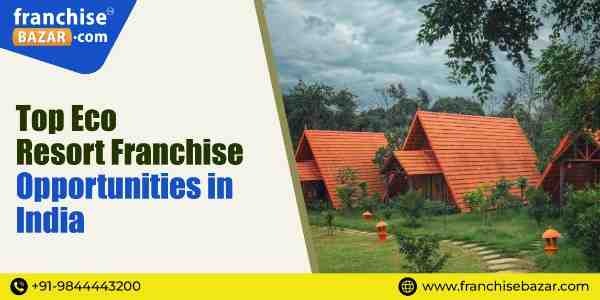
Top Eco Resort Franchise Opportunities in India
Written By: Resham Daswani
Indian eco-resort franchises for 2026 can be broken down into three types: branded eco-resort chains (which offer turnkey hospitality models with help finding land, designing the resort, and running it); boutique glamping/treehouse franchise models (which are good for hill stations and the edges of forests); and wellness-and-nature retreat franchises (which offer spa, Ayurvedic, and forest-stay concepts).
An entry-level eco-resort can have a little glamping or treehouse apartment that would cost anywhere between 25 lakh to 3-10 crore+ depending on acreage, number of rooms and location. Due to domestic wellness travel and government incentives for eco-tourism, Karnataka (Coorg, Chikmagalur), Uttarakhand, Himachal Pradesh, Kerala, Goa and Maharashtra (Western Ghats) are the most sought-after locations for eco-tourism franchising.
This book covers everything for investors considering hospitality franchising with sustainability at its heart, including expenses, branding, profitability, licensing and a step-by-step strategy. So you can decide what you think without opening fifty research tabs.
Why is eco-tourism franchising so much popular today in India?
Eco-hospitality is one of the fastest expanding segments of the franchise economy driven by post-pandemic wellness concerns, the shift from foreign to domestic tourism in India and a new generation of visitors looking out for ‘sustainable stays near me’. Different than standard hotel franchising, eco-resort models provide investors with the following:
- Lower land development expenses (natural materials, limited concrete, off-grid utilities)
- Falling in the same micromarket, green & wellness hotels charge a premium between 20 to 40% in comparison to conventional resorts.
- The state tourism boards of Uttarakhand, Kerala, Karnataka, Sikkim and Himachal are offering government support subsidies, single-window clearances or land-lease incentives to businesses favoring eco-tourism in India.
- Using sustainability as a USP, travel partners like AirBNB, Booking.Com, or even MakeMyTrip use this as a form of promotion in integrated marketing.
Eco-Resort Vs Regular Hotel Franchises in India: A Differential Comprehensive Guide
Created and run on a nature-based premises, making use of the brand name, SOPs and design guidelines, an Eco-Resort franchise can be in the form of
- Treehouses
- Woodland Cabins
- Container Resort
- Wellness & Health Retreats
Further, here is a guide, detailing the difference between each franchise-type.
|
Factor |
Eco Resort Franchise |
Regular Hotel Franchise |
|
Land Type |
Construction on rural, plantation, forest-fringe, hill or beach land |
Commercial and urban land plots |
|
Construction Type |
Lower embodied carbon, natural materials (wood, bamboo, mud, laterite) |
Brick based, uniform |
|
Utilities |
Off grid or hybrid use of Greywater recycling, solar power, rainfall collection |
Total use of grid-electricity, and Municipal water |
|
Experience Driven |
Tourists experience involves forest bathing, Ayurveda, plantation visits, bird watching, or even nature walks |
More driven by amenities like pool, gym, spas and banquets. |
|
Approvals |
need for further forest, coastal (CRZ) and eco-sensitive zone clearances. |
Municipal and tourism license approval bodies |
|
Typical ADR Premiums |
20-40% more in comparable markets |
Baseline |
Click Here For India’s First Container Based Eco-Luxury Resort Chain.
Which Business Models and Indian Eco Resort Franchises are Best to Explore?
Since eco-hospitality in India continues to grow and most well-known eco-resorts are owned or managed properties rather than franchises, it may be better to look at model types and actual cases of ideas they show rather than trying to pick a single ‘best’ brand.
1. Forest Resort Franchise Models - Carbon-Neutral Or Off-Grid Forest
Buildings Zero-emission operations, in-situ forest conservation, and treehouse/elevated cabin architecture. Machan, located in Lonavala, nestled in a conserved forest, is India’s first and only carbon-neutral-resort. Tourists' experience defines its beautiful nature walks & long-trekking paths.
2. Plantation and Heritage Eco Stay Model
Traditional construction methods including mud walls, laterite brick and thatched roofs were used to transform coffee, tea or spice plantation houses into guest rooms. Also featured were local community contacts, and plantation walks.
3. Ayurvedic-Wellness Retreat Model
Eco-friendly design and organic operations are the hallmarks of yoga, Ayurveda, and mindfulness retreats. Sustainability certificates are effective marketing tools due to their use of sustainable materials, solar-powered systems, and zero-plastic or low-toxin operating standards.
4. Eco-Hotel Turnkey Model
The investor oversees the hotel, while the franchisor locates the site, obtains approvals, and constructs and operates it. This model is more tuned toward investors than at hospitality entrepreneurs. One unique approach, often called an EBOT structure, provides a full asset and hotel management solution and the franchisor manages site acquisition, project reporting and continuing compliance, whilst the investor’s business is set up to own the property. Passive investors who want to make money in the hospitality sector but don’t want to be involved in day-to-day operations would love this notion.
5. Treehouse Boutique Glamping & Micro Franchise Model
Such lower-capex plans (5-15 units) are excellent for Tier 2/3 hill destinations, riverfront plots or agri-land diversification as they are built on smaller land parcels. the most seasonal and the fastest to break even.
What is the Cost of Starting a Franchise at Indian Eco Resort?
Format, ownership and location play a huge role in the investment. Here’s a fair split for 2026:
|
Format |
Apprx Investment |
Rooms / Per Unit Count |
Timeline To Break-Even |
|
Glamping Micro franchises or also Boutique treehouses |
25 lakhs to 1.5 crores |
5-15 units |
2-4 years |
|
Medium Size Forest plantation or heritage eco-stay |
₹1.5 crore to ₹4 crore |
15-30 rooms |
3-6 years |
|
Turnkey model – fully branded eco-resort |
₹4 crore and ₹15 crore plus |
30 to 80 rooms |
5–8 years |
|
Wellness and Ayurvedic retreats franchise |
₹2–₹8 crore |
15 to 40 rooms |
4 to 7 years |
Typical costs include land acquisition or long-term lease, green building, water and solar infrastructure, franchise fees or brand licensing costs and initial working capital. If you have enough property already (forest-fringe, plantation or slope) your actual entry cost is greatly lowered, as land is usually the single largest line item.
Licenses & Permits Required to Open Eco Resort in India
This is a frequent inquiry from novice franchise investors and a significant distinction between eco-resorts and traditional hotels.
- To acquire the advantages of eco-tourism, getting your registration done with the right state-tourism agency is necessary.
- Depending on the location your site is situated - a forest perimeter or a location adjacent to an eco-sensitive zone, authorisation from the environment officials is mandatory.
- If your property adjoins a restricted or protected forest, you are required to secure a NOC from the forest service.
- Any property bordering the coastline is required to obtain CRZ (Coastal Regulation Zone) authorisation.
- Approval of the architectural design and fire safety measures from the local panchayat or municipal authority.
- FSSAI license for on-site food service.
- Excise license where alcohol service is planned.
- Pollution Control Board consent (Consent to Establish and Consent to Operate).
- Labour and shop/establishment registrations.
One of the main practical benefits of the franchise model over starting an independent eco-resort from scratch is that franchisors offering the turnkey/managed model usually handle a large share of this on the investor's behalf.
What is the profitability and ROI of establishing an Eco-Resort franchise in India?
Eco-hospitality typically has a different profitability curve than city hotels:
1. The occupancy is seasonal, but has a good margin on profit. In the peak season (October–June), occupancy in most of the hill and woodland areas sometimes surpasses 70–85%. Savvy franchisees take use of monsoon-specific packages (forest bathing, waterfall excursions, wellness-detox weeks) to counterbalance the lower annual averages that the monsoon low season brings.
2. ADR premium accelerates payback. Well-run facilities can recoup capital expenses faster than a normal budget hotel of similar size, as environmental and wellness positioning supports a pricing premium of 20-40% over regular stays in the same region.
3. A reasonable ROI path Most well-located and well-managed eco-resort franchises seek to achieve an annual ROI of 15% to 22% once they have become stable (usually in the third year), although this is mostly dependent on location, the strength of the brand and the ability of the operator.
Which are the top location territories in India to start an Eco-Resort franchise today?
- Tourist spots in Karnataka, Coorg and Chikmagalur, popular for coffee, weekend getaways or even plantation stays are popular.
- Maharashtra’s Lonavala and Western ghats, close to Mumbai & Pune, showcase areas of well-developed eco-resort-friendly environment.
- Kerala’s hotspots like Wayanad or Munnar, are famous for nature & wellness combination.
- Demand for ayurvedic tourism, yoga and Himalayan wellness resorts in Rishikesh, Dehradun and Nainital, Uttarakhand
- The chance to change from a backpacker to a boutique environmental stay at the Manali and Kasol belt of Himachal Pradesh
- South Goa rural area - coastal ecotourism away from mainstream saturation of Goa.
- Puducherry/Auroville region: a delightful destination for eco architecture and organic lifestyle
Selecting the Appropriate Franchise Partner for an Eco Resort
Before signing a franchise deal, think about:
- Ensure track record of sustainability by seeking real-time data for aspects like water, waste, and marketing.
- Check the depth of support you will be receiving from the franchisor, in terms of design, approvals or even land due-deligence.
- Transparency of revenue model. Franchise fees, royalties, donations to marketing funds, and any revenue share agreements should all be disclosed clearly.
- Get information on occupancy and ADR of the current property from two or more comparable existing units to see how it is doing.
- Know what happens when the franchise period is up and under what conditions the franchisor might cancel the franchise agreement.
FAQs
1. Can I transform my existing farm house/plantation into a franchised eco-resort?
Yes, this is one of the most popular and economical entrance points as land is usually the biggest capital cost issue. Most franchisors will conduct a site-suitability review before bringing you on.
2. Is it necessary to have prior hospitality expertise to run an eco resort franchise?
Then there is the turnkey/managed-investment model in which the franchisor runs the operation. Nevertheless, it is recommended to have a hospitality background, making things easier for company management.
3. What is the break-even approximately expected for an eco-resort franchise in India?
In the case of a full scale brand resort, it takes around anywhere between 5 to 8 years. Moreover this also varies on its geographical locations, seasons, and repeat business services.
4. Are hill stations and forest areas the best locations to establish eco-resort franchise chains?
No, eco-resort formats can be supported in coastal, riverbank, desert (Rajasthan/Kutch) and even agricultural setups close metropolitan areas, provided sustainability and experience components are genuine.
5.What are the benefits for investors to consider investing in a eco-resort franchise vs a regular hotel franchise in India?
Two important aspects that show eco-resorts franchises are more in demand as compared to regular hotel opportunities include, utility costs on a long term basis making use of solar and water-recycling infrastructure, therefore generating a higher margin baked revenue, with premium stability.
Are You Ready To Explore Eco Resort Franchises in India?
Eco-hospitality is one of the few franchise sectors in India, where earning a lot of money and being ecologically conscious do not contradict each other but rather function well together. Whether it’s a turnkey branded eco-resort, a plantation heritage stay or a boutique glamping model, the key is to match the model to your land, your capital and your desire to be hands on in operations.
Research Eco-Resort & Eco-Hotel Franchise Opportunities Franchises Certified on Franchisebazar to Know Investment Needs, Brand Support and Region Fit Before Investing
Disclaimer: The brands mentioned in this blog are the recommendations provided by the author. FranchiseBAZAR does not claim to work with these brands / represent them / or are associated with them in any manner. Investors and prospective franchisees are to do their own due diligence before investing in any franchise business at their own risk and discretion. FranchiseBAZAR or its Directors disclaim any liability or risks arising out of any transactions that may take place due to the information provided in this blog.
Recent Blogs
Thinking about opening a Kidzee franchise in India in...

Want a franchise...

Thinking about becoming a master franchisee in India? Master franchisee...


Why Should I Register?
You are seeking to access information which is provided only to registered members. It takes less than a minute to register and access information on FRANCHISEBAZAR.